)
)
)
Can TV survive the democratisation of content production?
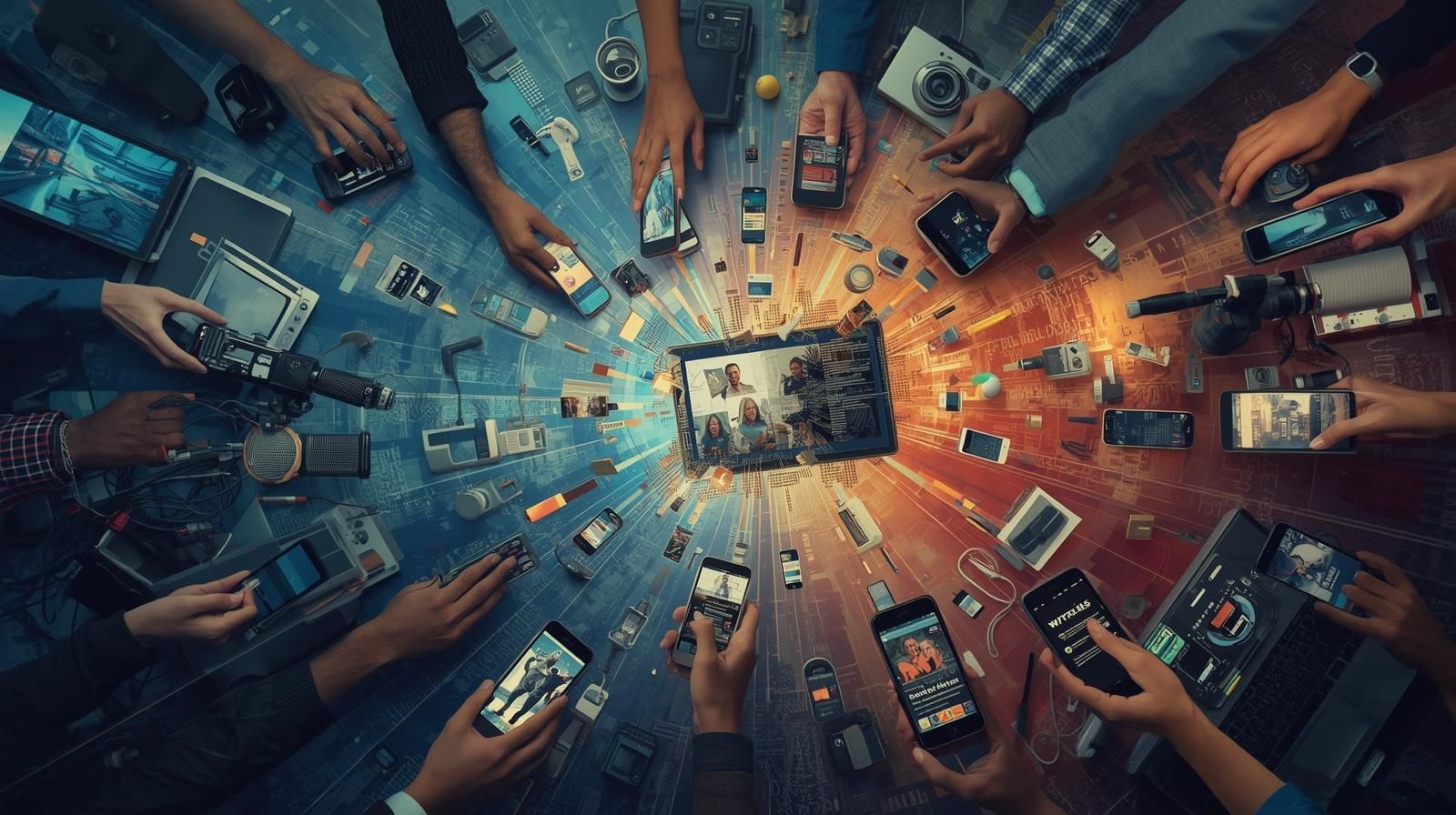
There was a time, not so long ago, when watching TV meant tuning into whatever was being broadcast at the time. All you needed was a TV and an aerial. Freeview provided a plethora of free TV channels, and Sky and a satellite dish provided a load more for those who could afford it.
And that was about it. You could supplement your TV viewing with DVDs and posher Blu ray discs, and that was your lot.
Fast forward to 2025, and the choice is now overwhelming. What we now refer to as linear TV has been dwarfed by a daunting array of streamers, catch-up services, social media platforms, the all-powerful YouTube and TikTok, video-podcasts, and more.
The humble TV isn’t even the favoured choice for watching TV anymore, when much more convenient smartphones are immediately available in everyone’s pockets.
This huge democratisation of content has rapidly accelerated a move away from gatekeeper-controlled media to open, creator-driven platforms.
With so many sources of media vying for attention, audiences are fragmented and difficult to hold onto. Overnight ratings have been on the decline for years, and while there are still occasional appointments-to-view, such as the likes of The Celebrity Traitors, these are few and far between.
Meanwhile, many of the biggest shows across all genres come out of the streamers, and digital content creators are bringing in audiences way out of the reach of TV networks.
Advertising revenue is following viewers to digital platforms, too, where ads can be targeted and personalised, metrics are measured and there’s a clear return-on-investment.
Traditional broadcasters and studios are facing massive pressure to adapt – some are partnering with online creators for TV formats (most notably with Amazon’s Beast Games) and producing content specifically for streaming and social media, including Channel 4’s youth-friendly Channel 4.0, which promises “the freshest content from the UK's biggest creators.”
TV companies are launching their own YouTube channels, creating short, shareable clips of programming for social platforms, and integrating social-media trends into programming.
There’s an argument that high-quality TV production combined with influencer-style authenticity could see content produced by TV producers and broadcasters eventually sweeping away the dominance of digital-native content creators.
As Sidemen manager Jordan Schwarzenberger said about TV production companies at the Wales Screen Summit recently: “If you know how to engineer content well for the platforms… you can build IP, you can build an audience. You can take a show – scripted, unscripted – and you can find an audience for it. You guys are the best storytellers. You have the resources, the money…. the minute I think that move happens, it’s going to be a totally different world.”
Democratisation of content is reshaping the entire media ecosystem and traditional broadcasters face disruption but also new opportunities if they adapt. The ability to compete for eyeballs in the evolving landscape may well involve blending professional standards with participatory culture.
Storytelling and the human desire to share it remains at the heart of the industry’s evolution. The barriers-to-entry have been lowered, and traditional TV will need to embrace collaboration, experiment with new formats, and adapt quickly to remain relevant.