)
)
)
‘SOUNDS GOOD’. How the Sound industry is adapting to changes in technology and viewer habits, and how the Association of Motion Picture Sound is working to protect the craft.
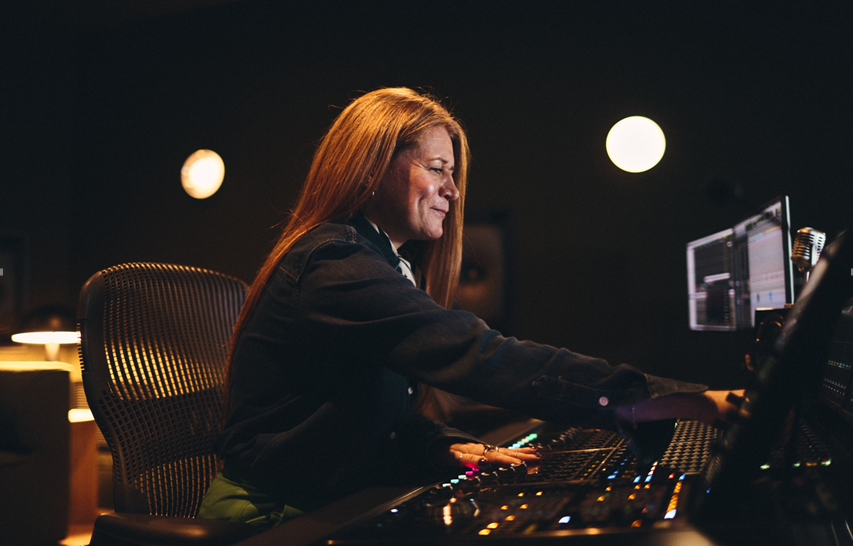
Since the moment I took trays of teas and coffees in to Dub 1 at BBC Pebble Mill I knew it was a special room where magic happened. I’d sit at the back of Drama mixes and marvel at their meticulous attention to detail. The difference changing the volume of a footstep made, and how they could make the hairs stand up on your arms with a subtle swell of the music. I fell in love with sound and knew it was the job for me.
Throughout my time in the industry though, sound has quite often felt like the poorer sibling of pictures. You quickly learn that if you’ve done a good job you shouldn’t really notice and people will often only comment if it’s not right. Sound is subliminal and subjective, which means it can be overlooked and it’s huge value unappreciated, but to me it’s the most powerful craft and the pinnacle of collaboration and creativity – from the acquisition to the Final Mix.
The principles of everything we do are still the same, but the industry has changed dramatically over the past few years and machine learning and AI technology have quickly found their way into our workflows, saving time and automating many repetitive tasks, but also encouraging people to think money can be saved in the wrong places and miracles are possible, but there’s still no replacement for properly recorded sound, captured performance and a well thought out schedule. Although concerning at a time when work is thinner on the ground, we are learning to adapt as an industry as AI is definitely here to stay, but one thing we at AMPS are working on with other industry guilds is how to deal with the moral and legal implications behind its use and how to protect the skills and IP of actors, voice artists and our members and colleagues. We don’t have any answers yet as it feels such a colossal question, but we want to help our members navigate this time.
The Association of Motion Picture Sound was born nearly 40 years ago, a group of talented and passionate sound professionals from Production and Post who wanted to create a space where people could exchange information, solve common problems and keep abreast of rapidly changing technology. The 15 founding members were all top of their game – and all gentlemen, as probably 99% of the workforce in sound at that time was made up of men. The first female member of AMPS joined nearly 2 years later – number 121.
Even now there is a lack of representation in Sound, not just with gender, but across ethnicity, disability and socio economically. We’ve struggled to properly assess the situation as there are currently no confirmed stats that cover it. Sound Editorial and Dubbing/Re Recording mixing roles are lumped in with Post Production in most of the surveys we have found meaning the figures are highly skewed. Where it is now insisted upon that some productions have equal gender representation across HOD roles Sound is not even included in the list of jobs that qualify– so we have a glass ceiling that is not only hard to crack but virtually impossible to know how thick it is. This year there was one woman nominated consistently across all of the major feature film sound awards – amongst over 20 men. And let's be honest – at a time when the UK population is made up of 51% women it’s quite concerning when a female on the team is considered a diverse hire. Everyone consumes content whether it be feature films, drama, current affairs, reality shows, YouTube or games, and we feel that the workforce behind the sound needs to include more diverse voices and experiences to represent them.
We are soon to launch a new initiative called ‘AMPLIFY’ which along with our mentoring scheme and mission to elevate sound amongst the other craft roles, we plan to map the industry in its current state so we can work out how to address the issues and monitor the positive differences that we hope to make. We want to educate people at school age and show them these really cool jobs exist in order to make steps to change the make up of our side of the industry in generations to come.
We are a volunteer led organisation and at a time when the 2024 ‘Film & TV Charity ‘Looking Glass Report’’ shows a shocking 64% of people are thinking of leaving the industry and 35% say their mental health is poor or very poor, we take our responsibility to our members very seriously. It’s a huge challenge, but we must continue to build a more diverse and inclusive community and preserve the respect for Sound so the craft doesn’t disappear.